News from the Hoe

    2013

  • 7 May - Early Spider Orchids: a stunning success story for Samphire Hoe

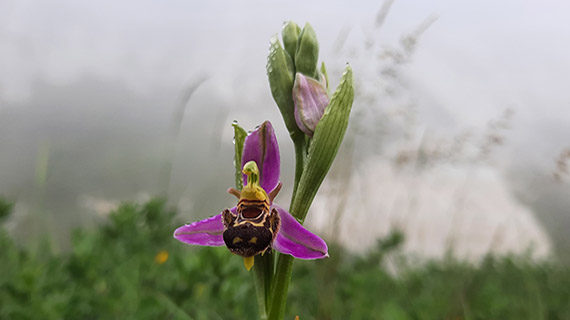
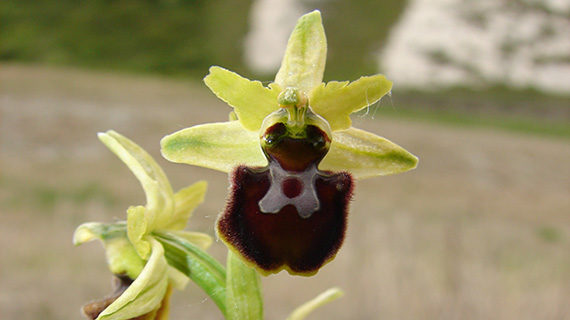
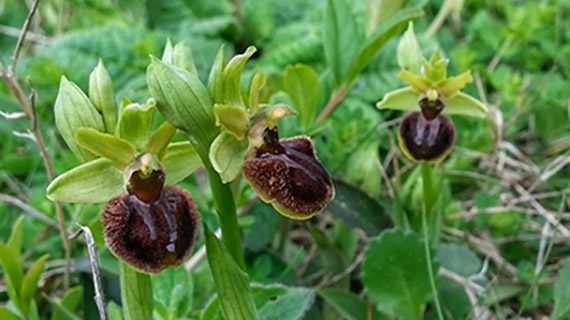
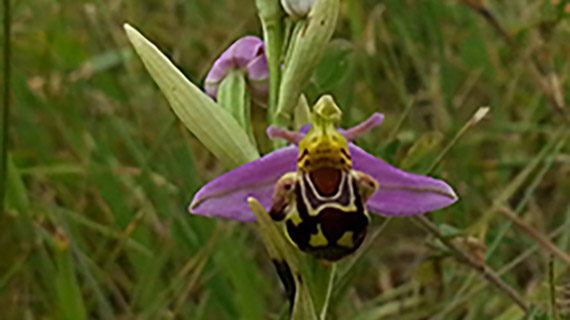
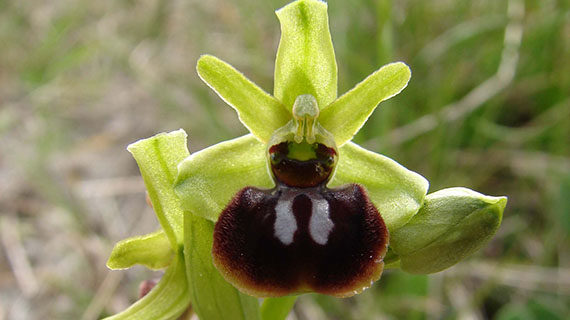
    The early spider orchids at Samphire Hoe have begun to flower. They are one of Great Britain’s rarest orchids and are only found along the south coast from Kent to Dorset. Their name comes from the early flowering season and also the flowers have a resemblance to a plump spider. In fact the flowers are mimicking a female andrena bee, both in looks and scent. The males are attracted to the flower and whilst they try to copulate with it one or two pollen sacks become attached to their heads. On subsequent attractions, this results in the pollination of the flowers.
    Paul Holt, from the White Cliffs Countryside Partnership, said : ‘This year the flowering season is about four weeks later than normal, probably due to the long cold winter. It was back in 1998 that the first orchids were found at the Hoe was and we counted 67 of them. Last year in 2012, their numbers were over 11,000. We have yet to count them this year but the numbers seem a great deal lower. In the past recent years, the trend has been that after a good year, the following one sees reduced numbers; so I am not unduly worried’.
    The orchids occur on the cliffs above the Hoe and this is most likely the origin of the population here. The colony of early spider orchids has become so well known that people travel from as far away as Birmingham to come and see them. These enigmatic plants have featured on television a number of times including the One Show and Spring Watch. As with all orchids, there is a close relationship between the plants and fungi, without which the seeds will not germinate.
    They will be in flower for the next few weeks. So it is a perfect time to come to the Hoe and discover the orchid which is a bee trickster. The best area to spot them is on the side of the path adjacent to the railway.
  • April - Birdwatching news at the Hoe

    The recent sightings of a bluethroat at Samphire Hoe in late March encouraged a number of birdwatchers to visit the Hoe for the first time. Despite the cold weather, it showed very well at times. Even though the bird was the less colourful female, birders were pleased with the sighting. Bluethroats are a rare species in Kent with about one sighting a year. This spring with the strong easterly winds, several were seen in the county and the one at the Hoe stayed from 27 March until 3 April.

    To provide more information about the birdlife of the nature reserve, the 2012 Samphire Hoe Bird Report has been compiled. The report summarises the year’s sightings and gives a good idea of the species that can be seen at the Hoe and when is the best time. The report was put together by Derek Smith, one of the Samphire Hoe Volunteer Rangers . Derek has been a keen birdwatcher for many years and has been helping at the Hoe since it opened in 1997.
    More information on the Samphire Hoe Bird reports page.
  • 21 March - Porpoises seen off the shore at Samphire Hoe

    The recent calm weather has provided ideal conditions to see the harbour porpoises that have been feeding offshore from the Hoe for the last couple of weeks. Most days one or two have been seen, but on Tuesday 19 March there was an unusually large pod thought to be up to 15 in number. Unfortunately it was difficult to get an exact count as they were so active. Phil Smith, one of the Volunteer Rangers at the Hoe, said: ‘Where ever you looked they seemed to appear; some times they were in so close it was possible to see them very well with the naked eye’. However most of the time a pair of binoculars does help. A top tip for spotting porpoise is to watch the gulls: if they are circling over an area of water, it may well be that fish are being forced to the surface by feeding porpoises. Harbour porpoises are the smallest dolphin species in British waters. They grow to a maximum length of 2m, have a short rounded dorsal fin and a blunt snout. The most common view of them is of the dorsal fin and a section of their back rolling through the water. Occasionally they rest on the water surface giving prolonged views; And in moments of intense activity they can almost come right out of the water surface giving more of an idea of their shape, colour and size.

  • 4 March - Coltsfoot in flower at Samphire Hoe

    One of the signs of spring that Paul Holt looks forward to at the Hoe is the first coltsfoot flowers. These small bright yellow dandelion like flowers normally appear in late February or early March. They are in flower now and can bee seen along the path adjacent to the railway line fence. They have a number of local names, one being ‘son before father’ as the flowers appear before any leaves do. When the leaves do emerge, they are similar in shape to a colt’s hoof print, hence the name. The leaves have distinct pale hairy undersides. It was once thought that smoking the dried leaves cured coughs, a difficult one to believe! The plant is also said to indicate coal in the ground which could be the case as the Hoe which was location of the first coal mine in Kent, but sadly this is also an old wives tale. It does however prefer wet clay soil that has been disturbed. The early flowers can provide a source of nectar for newly emerged insects such as hoverflies.

  • 6 February - Samphire Hoe: the big "Big Year" challenge in 2013

    In 2008 local birdwatcher Ian Roberts did a "Samphire Hoe Big Year": he tried to see as many species of bird as he could at Samphire Hoe. In order to be taken into account, the birds had to be on the Hoe or seen from it. After numerous visits, he saw 153 different types. The total number seen during the course of the year was 160 so he only missed 7 species.

    This year 2013, Ian is repeating the challenge with the aim of seeing more species. So far this year, he is doing well having seen 68 species by the 31 March, he has only missed 5 species so far. On the 31 March in 2008 his total was 57 so 2013 is shaping up as a big ‘Big Year’. He has already added two new species of bird to the Hoe list: two Egyptian geese flew by and he was quick enough to take a record shot, with the camera! During the recent cold spell, a very elusive Jack Snipe was seen down by the pond. This takes the total number of species of bird ever seen on or from the Hoe to 213.

    To follow how Ian is getting on, check out his web site Folkestone and Hythe Birds available at http://www.freewebs.com/folkestonebirds/index.htm, then click on the link to the Samphire Hoe year list.
    More about in pictures

  • 17 January - Bird sightings at Samphire Hoe

    The recent cold temeratures and snow on mainland Europe have caused an arrival of interesting birds at Samphire Hoe. In the last couple od days, there has been up to 40 redwings and more than 20 fieldfares feeding in the grassland in search of worms and other invertebrates.

    These two species of winter thrush often spend the first part of winter feeding on berries but as food supply diminishes, they move onto grassland looking for other kind of food. They have also been joined by an increasing number of blackbirds, song thrushes and starlings. Lapwings have also been seen both feeding on the Hoe and flying in off the sea.
    More about in pictures

  • 13 January - Guided walk from Samphire Hoe to Lydden Spout

    On Sunday 13 January when the weather was cold but very pleasant, 23 people joined Paul Holt, ranger at the Hoe, for a good walk from Samphire Hoe to Lydden Spout. While many of the walkers had never seen the Lydden Spout before, they had the perfect conditions to see it at its best with all the wet weather we have had before.
    Lydden Spout is a fresh water spring that emerges from the base of the White Cliffs of Dover, a short distance from the west end of Samphire Hoe. The spring always flows but with the recent wet autumn and winter weather, the water is gushing out of the cliff and has cut an impressive gully through the shingle beach.

    Paul Holt is taking the opportunity to remind visitors at Samphire Hoe that it is potenially dangerous to walk att he base of the cliffs, particularly after very wet weather.
    More about in pictures

    2012

  • 20 December - Is volunteering on your list of new year's resolutions?

    Thinking about new year’s resolutions? Like:

    Taking more exercise?
    Meeting new people?
    Doing something different in 2013?

    How about coming along on a volunteer event at Samphire Hoe? It is a great way to do all of the above without the cost of gym centre fees. We provide all the leadership advice, tools and equipment, a smile and a cup or two of tea. For dates of the events look on the events page or give us a call at the Hoe on 01304 225649.

    Happy New Year!

  • 17 December - Twelve Christmas sightings

    Winter is a great time of year to get out and enjoy the elements at Samphire Hoe. Crisp sunny mornings or strong South Westerly winds can really get your blood moving. It can be an exhilarating experience during these shorter days to watch the huge overtopping waves here at Samphire hoe, from the safety of the main path.
    Pick up a festive sighting sheet at the tea kiosk/office: there are twelve things to spot while you are out enjoying your walk around the Hoe. See how many points you can score…
  • 28 November - Autumnal rarities at the Hoe

    For birdwatchers, the autumn can be a very exciting time. The large scale seasonal migration is swelled with the year’s young birds heading south, and there is always the chance of an unusual sighting. The autumn of 2012 will go down in Samphire Hoe history as the best ever... so far for unusual birds. Excitement began when a juvenile Rose-coloured Starling was found feeding in bramble bushes by the back car park on 20 September. This is a species that is normally found only as far west as Turkey. It stayed for the day with a flock of Common Starlings but was not seen the following day.
    As the autumn progressed, birds from even further away began to arrive with a Yellow-browed Warbler from Siberia on 7 October feeding in the sycamore tree opposite the office. Seen in the same tree on 22 October, a Pallas Warbler known as a ‘seven stripe sprite’ is a tiny bird smaller than a wren and has a wonderful selection of eye stripes, crown stripe, wing bars and a yellow rump. It stayed around for two days. Normally at this time of year, it should be going to its wintering grounds in China!
    And to round it all off on 18 November, Roger Card, one of the volunteer rangers at Samphire Hoe, was lucky enough to see and photograph an Asian Desert Warbler as it hopped about on the path in-front of him. This very rare bird comes from Iran and Afganistan. It was only the second ever recorded in Kent, the 11th for Britain and the first to have been seen in England for 12 years.
    Such sighting of rarities is fascinating for birdwatchers and the natural phenomenon of migration truly is a nature's wonder at Samphire Hoe.
    More about in pictures
  • 27 October - King Lear came to Samphire Hoe to celebrate Halloween

    On Saturday 27 October, volunteers and staff at Samphire Hoe put on a Halloween extravaganza called 'King Lear struts his stuff' as part of Kent Coastal Week. The version of William Shakespeare's King Lear was especially adapted for the occasion by local actor Tony Clark.
    Some 60 people braved the dramatic weather to see the St Margaret's players perform this family-friendly version of the tragedy using props, including a hovel, some stocks and even some gallows, made by Samphire Hoe staff.
    The play is actually suited for Halloween as much of the action takes place during a raging storm as many deaths occur, including a hanging, poisoning, suicide, death from duelling, and eventually that of King Lear from a broken heart.
    Despite the adverse weather, children at the event enjoyed becoming unruly knights by playing conkers and pelting Kent in the stocks. Later on, they chased after the Earl of Gloucester's gouged eyes and joined in a battle scene with loud cannon fire explosions.

    Steve Walker, ranger at Samphire Hoe, said: "It was absolutly amazing that so many people came out as the weather forecast was awful. Earlier in the day, the event nearly got cancelled as it was freezing cold with strong gusty winds, the skies opened and it poured down.
    "During King Lear's madness, it rained a little which only added to the drama with a bright rainbow arching over the action"

    At the time that William Shakespeare was writing King Lear, he was said tyo have travelled regularly through Dover. It was his familiarity with the cliffs that may well have inspired his descriptions. To this day the first cliff on the west side of Dover is known as Shakespeare Cliff and the place where construction of the Channel Tunnel started.
    More about in pictures

  • 18 October - Hovel on the heath for King Lear struts his stuff

    In preparation for the King Lear struts his stuff at the end of the month, the 'hovel on the heath' has been constructed at Samphire Hoe. Steve Walker, from the Hoe, provides futher details on the event: 'The Hovel is created with hazel tree cut from traditional coppice as shelters have been made in this fashion for thousands of years. It will play an important role on Saturday afternoon 27 October when the world of King Lear will be brought to life at the Hoe with the help of St Margaret's players'. So then rendez-vous at the Hoe to take part in this fascinating theatrical walk! More information.
  • 14 August - Tigers seen at Samphire Hoe

    Moth trapping

    On 11 August, a moth trapping session attracted three Jersey Tiger moths to the bright lights at Samphire Hoe. Jersey Tiger moths are brightly coloured with the most amazing orange marking under the wings and nearly as big as a butterfly such as a red admiral when they fly.
    Their sighting surprised Paul Holt, the Ranger at Samphire Hoe, who said :"They are the first I have ever seen at the Hoe in 14 years of working here. In only a couple of hours of trapping, we recorded over 26 species of moth, almost as many species as we would see of butterfly in a whole year!".


    jersey-tiger-moth

    In recent years, Jersey Tiger moths appear to have spread their wings and extended their range. They are very distinctive and unlike most other moths, they also fly during the daytime making it easier to see. They can occasionally be seen in the day time on buddleia bushes, which was the case on 13 August with the sighting of one Jersey Tiger moth on the buddleia along the back track at the Hoe.

  • 18 July - The Olympic Torch Relay comes to Samphire Hoe

    The Olympic Torch relay

    The Olympic Torch relay arrived at Samphire Hoe after travelling underground through the 9 km section of the Channel Tunnel from Folkestone, on Wednesday 18 July 2012.

  • 17 July - Eurotunnel presented with an eighth consecutive Green Flag award

    Eurotunnel is delighted that the Samphire Hoe nature reserve has been honoured with the prestigious Green Flag award for an eighth consecutive year, in recognition the site’s inclusive public access and the high quality of its environmental sustainability.

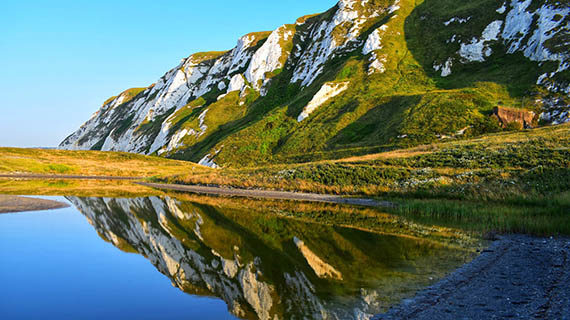
    Samphire Hoe is a 30-hectare site owned by Eurotunnel Group and was reclaimed from the sea using almost 5 million cubic metres of chalk marl extracted from below the Channel and transformed into a nature reserve with an impressive range of biodiversity.

    Opened to the public exactly fifteen years ago to the day (17 July 2012), this impressive nature reserve at the foot of the famous White Cliffs of Dover is home to some 200 different plant species (including rare orchids), 30 butterfly species and 208 bird species.

    The day-to-day management of this natural space has been entrusted to the White Cliffs Countryside Partnership, which receives the support of many volunteers from Kent.

    The Hoe is open to the public from 7am until dusk, 365 days a year.

    On Wednesday 18 July, it will play host to the Olympic Torch Relay which will run along the foot of the White Cliffs on its way to Dover for the evening celebrations.

    Communities Minister, Andrew Stunell said: “Great parks and green spaces have a huge impact on local communities, providing places to play and relax as well as bringing generations together in a variety of ways. They are fundamental to our quality of life, whether in cities, towns or villages, and the Green Flag Award scheme seeks to help raise the standards of them all. The many excellent stories coming from the scheme prove what communities and volunteers can achieve by working together with professionals in our green spaces.”

    Eurotunnel Commercial Director, Jo Willacy, said “The desire to avoid environmental consequences from the company’s activities was already evident from the time of the construction of the Channel Tunnel. As a result, today more than 100,000 visitors a year appreciate the tranquil natural landscape and rare flora and fauna in a location created from Tunnel excavation which is freely accessible and provides a site for bio-diversity and leisure for all.”

  • 27 June - Samphire Hoe is on the run

    Two running events have been held in June at Samphire Hoe and two more are on the agenda at the end of July and end of August.

    On Tuesday 26 June, Samphire Hoe was the venue for the East Kent Interclub summer running relays hosted by Dover Road Runners. Over 200 runners from all over East Kent clubs took part in the race which introduced Samphire Hoe to a number of people for the first time.

    On Wednesday 27 June, the second of a serie of four races organised by Nice Work, a leading road running event management company, was held at Samphire Hoe. On a perfect summer evening, over 50 runners took part in the 5 K race with a good number of runners coming in at under 20 minutes. Congratulations to all competitors.

    The third and fourth races in the Summer evening series will be held at Samphire Hoe at 7.30pm on 25 July and on 29 August 2012. To join in the race, please view all details and fill the entry form on Nice Work website at www.nice-work.org.uk.

  • 9 May - Bunches of early spider orchids at Samphire Hoe

    The early spider orchids have had a great season this year: the number of plants counted amounts to about 11,500, the second biggest year since the opening of Samphire Hoe. This represents a massive increase from the 67 plants first recorded back in 1998. Early spider orchids are one of Great Britain's rarest orchids only found along the south coast from Kent to Dorset. They are one of the first flowers to blossom in the year and are commonly said to resemble plump spiders. With the cool spring weather this year, early spider orchids will probably still be blooming by the end of May.


    As a rare orchid type restricted to only a few sites in the UK, they are the subject of particular attention and numerous photography close-ups. Wildlife cameraman and producer Richard Taylor-Jones recently visited Samphire Hoe to film the orchids, which may feature in the popular television programme Springwatch. Focusing on the beauty of some of the UK's wild places, Richard Taylor-Jones said: 'We had a great couple of hours zooming in on the early spider orchids and got some lovely images to broadcast'.

  • 6 February - Snow on the Hoe

    animation-snow-on-the-hoe

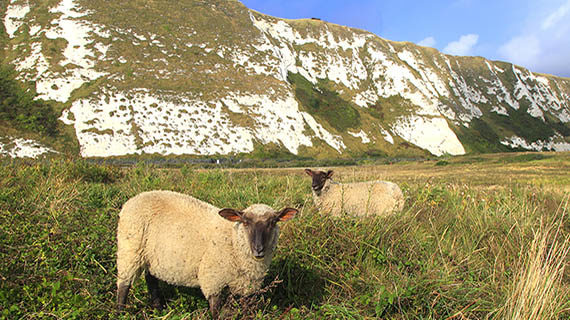
    The bitter cold snowy weather has turned the Hoe white. The beach at the west end has a blanket of snow. The conditions have resulted in the sight of some unusual birds on site, such as dunlin on the sea wall, lapwing and snipe on the grassland and woodcock have been flushed from the scrub. Fortunately, there is still some grass visible and the sheep are well insulated unlike the rangers who had to wrap up warm.


  • 14 January - From Samphire Hoe to the top of Shakespeare Cliff: a Shakespeare recital

    Shakespeare Cliff Recital

    On Saturday 14 January 2012, Paul Holt from the White Cliffs Countryside Partnership led a walk from Samphire Hoe up onto the top of Shakespeare Cliff. It was perfect winter weather and 18 people in total came along on the walk. “We started at Samphire Hoe, walked up through the tunnel and looped round onto the top of Shakespeare Cliff. We even managed to recite an abbreviated part of King Lear which was said to have been inspired by the very cliffs we were walking over; there is a cliff whose high and bending head looks fearfully into the confined deep”. said Paul. One of the best things about the walk is actually the view from Shakespeare cliff into Dover; it is a different perspective that not many people see but is probably one of the best.

2011

2011


SamphireHoe Report


    2010

  • March 2010 - Early Spring wildlife at the Hoe

    Animation Samphire Hoe

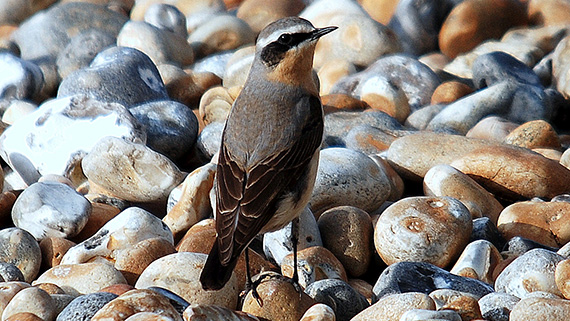
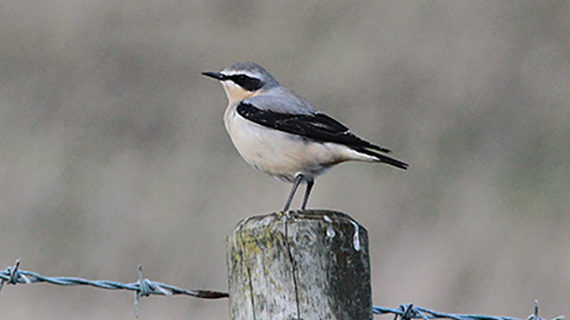
    As the days are becoming longer and the weather a touch warmer, the wildlife of the Hoe is beginning to appear. The first Wheatears have been seen. These summer migrants breed in upland of Britain and even further north, and pass through on their travels. The name is derived from the Anglo Saxon for ‘white bottom’ a distinct feature they show when flying. Another herald of spring is Colt’s-foot the yellow flowers are some of the first to emerge and strangely enough do so before the leaves giving it the nick name of ‘son before father’. The last few days of March saw the first couple of sightings of Adders; they are often the first reptiles to become active in the course of the year.

    2009

  • November 2009 - Return of the animals

    Animation Samphire Hoe

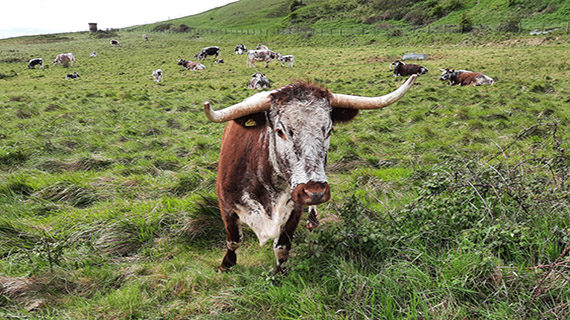
    With the approach of winter the livestock have returned to the Hoe. There are currently 6 heifers and 41 sheep grazing the grassland. The sheep are mostly ‘Suffolk’ and the cows are a ‘Hereford’ cross breed. Five of the sheep have bells on this is to make people more aware of their presence and it adds an attractive sound to the peace and quiet of the Hoe. By grazing the site, it is hoped that the grassland will continue to develop into a type of coastal chalk grassland, one of the rarest habitats in the world. This type of management should help keep some of the areas of vegetation short which is perfect for the colony of early spider orchids. As always to keep the balance between the people visiting the Hoe and the wildlife and livestock we ask that dogs are kept on a lead at all times and visitors stay to the paths.